Every project is different, but they all move through the same five stages — and knowing them in advance is half of what makes a young builder calm when things get hard.
1
Before anything · the Discovery Meeting
Choosing the mission
We sit down together and work out what your child actually wants to make. Not an assigned project — their idea, or one from the Builders Menu that genuinely excites them.
That choice matters more than anything else that follows. Nobody finishes a hard project about something they don’t care about.
2
The first sessions
Thinking — the part that never stops
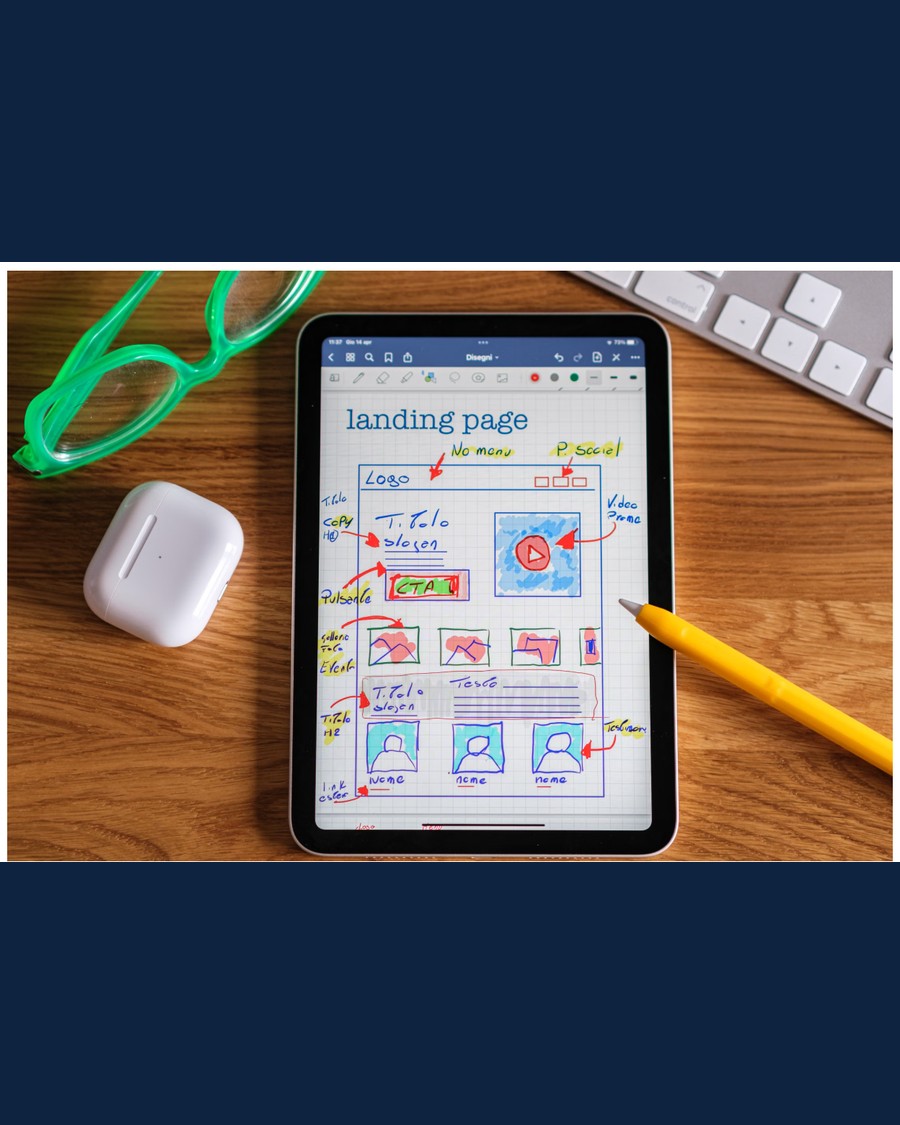
This is the part that surprises people. Before any building starts, your child sketches, argues with their own idea, changes their mind, and plans what every part of it should do.
On paper, on a whiteboard, in Excalidraw — and increasingly in conversation with AI as a thinking partner rather than a machine that hands out answers.
📜 A letter to themselves
In one of the first sessions, every builder writes a short letter to themselves: what they’re making, and why they want it to exist. It clarifies the idea faster than any amount of talking — and it gets opened again at the end, next to the finished thing.
📁 The Project Design File
Everything lives here — the letter, the sketches, the notes, the rejected ideas, the plan. By the end it’s a proper record of how their thinking developed, and it’s theirs to keep.
Nothing gets built until the vision is clear, because the finished thing can never be better than the thinking behind it. That is true of the first week and it stays true of the last.
3
The middle weeks
It starts becoming real
Now the plan turns into something on a screen. Your child describes what they want in plain words, directs the AI to make it, looks at what came back, and decides what to change.
Then again. And again. Piece by piece, the thing in their head starts existing outside it — and you’ll hear about it at home, because at this stage they can’t not talk about it.
💡 IDEA→
🛠 BUILD→
🧪 TEST→
✨ IMPROVE→
🎤 SHOWCASE
That loop runs dozens of times across a build. It isn’t a lesson plan — it’s simply how everything real gets made.
And notice where it starts. Not with a keystroke — with an idea. Every single lap round that loop begins with a decision about what should happen next, and that decision is your child’s. The building is what carries it out.
4
Guaranteed · every single build
Then they hit the wall.
Something stops working. A feature turns out harder than it looked. The version that ran perfectly last week suddenly doesn’t, and nobody can immediately say why.
This happens in every build ever made, including mine. It is not a sign that anything has gone wrong — it’s simply the middle of the work.
In fact there are only two certainties in a build, and it is worth knowing both before you start. The first is that this will happen — not might, will, in every project, to every builder. The second is that we get through it.
That second one is my job, not your child’s. When the direct route is blocked, working out the way round it — a different approach, a different tool, the same idea built a simpler way — is the part I bring to the table. It is what twelve years of teaching and eleven months building a system nobody had built before actually amount to: a long education in not being stopped.
This is the stage the whole club exists for. Not the typing. This.
So your child sits with someone who has been stuck in exactly that way many times, who is completely unbothered by it, and who will keep finding another angle until it moves. Slowly, they stop being frightened of the hard part.
And that is what they carry out of the door. Not the website. The discovery that being stuck is temporary, that problems have ways round them — and that they are the kind of person who finds them.
5
The last stretch
It goes live
The final weeks are testing, tidying and fixing the small things — then it gets hosted properly, at its own address, and it exists.
They open the letter they wrote in week one. Then they send the link to their friends, their grandparents, anyone who’ll look.
Ask anyone who has ever built something: that feeling doesn’t fade.